


Link to the flight
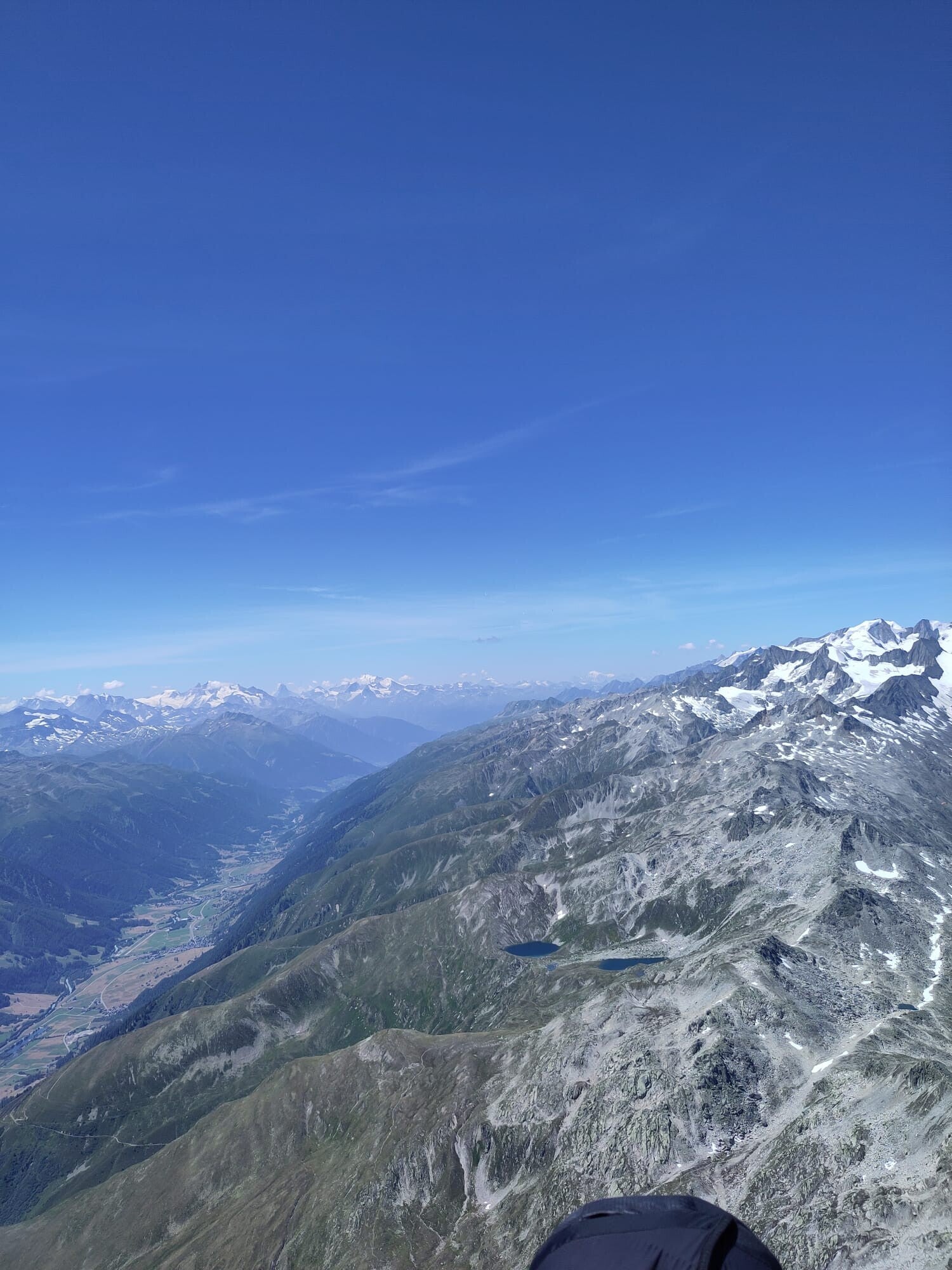
The Goms
July 12, 2026. We were in the middle of the hottest summer ever experienced in Switzerland. The forecast for cross-country flying was absolutely thermonuclear. The intense heat in the lowlands was expected to lift thermals to exceptional altitudes and, combined with light winds and maximum sunshine, I knew I would be able to fly far and stay in the air for a very long time.
My plan was to improve on my previous personal best with a route linking Fiesch, Andermatt, the Grand Muveran, and a southern turnpoint close to the Italian border. The location of that final turnpoint is always difficult to predict in advance: depending on how the day develops, it can end up being either in the Zermatt area or around Saas-Fee.
I launched at 10:20, and it was an immediate disappointment. The thermals above Fiesch were poorly organized, and it took me more than 15 minutes to struggle my way up to 2,700 m before making the first transition towards Bellwald. Normally, the rest of the Goms Valley is little more than a formality. Today, however, I had to scrape together weak, broken thermals while dealing with a light easterly wind. I remained cautious to avoid getting too low, and progress was slow.
I encountered the famous Grimsel "snake" even before reaching Ulrichen and was only able to set a turnpoint well before the pass itself.
On the way back, I persisted, and the convergence thermal created by the interaction between the Grimsel snake and the Goms valley wind finally launched me up to 3,600 m. This allowed me to cross the pass comfortably and make an attempt toward Andermatt. But along the slopes bordering the Rhone Glacier, the thermals were still poorly organized. I only managed to climb to 3,100 m and decided to return to the Goms. Fortunately, I found another climb that took me to 3,500 m, giving me enough altitude to reach the convergence zone safely.
The return towards Fiesch was much easier. I had effectively "moved up a level" and was now flying higher in the atmosphere. I comfortably connected with the Eggishorn thermal
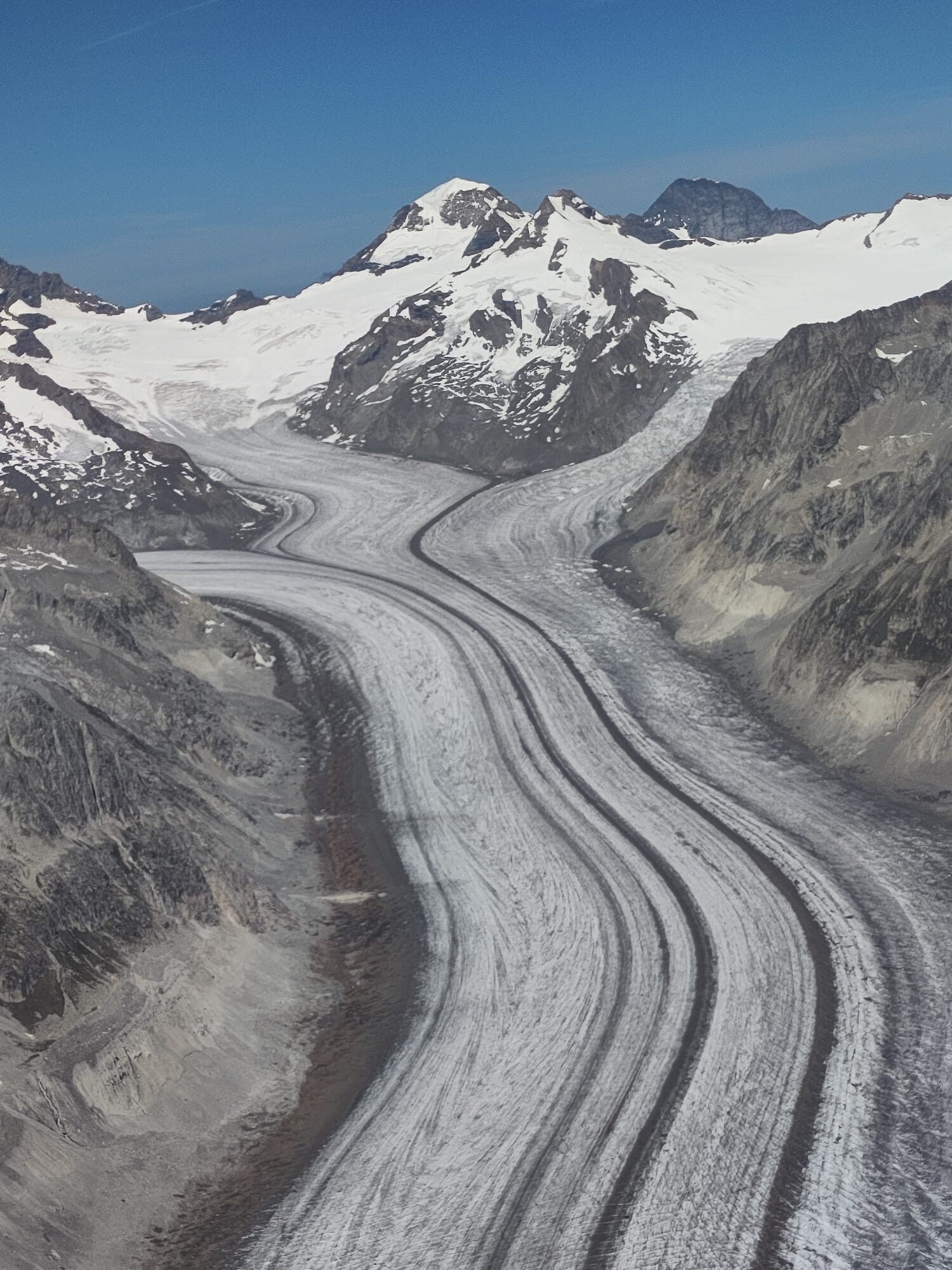
High altitude Cruising
This thermal was the first truly good one of the day. Wide, smooth, and powerful, it allowed me to gain more than 1,000 metres in just seven minutes and marked the beginning of my high-altitude journey. From that point on, I would drop below 3,000 m only twice during the remainder of the flight!
With this altitude and the conditions finally established, I crossed the glacier directly. There was no need to take the usual detour via Visp. The massif north of the glacier was working well, and before long I found myself east of the Bietschhorn at nearly 3,900 m.
I then decided to attempt a line I had never flown before and headed across the Lötschental.
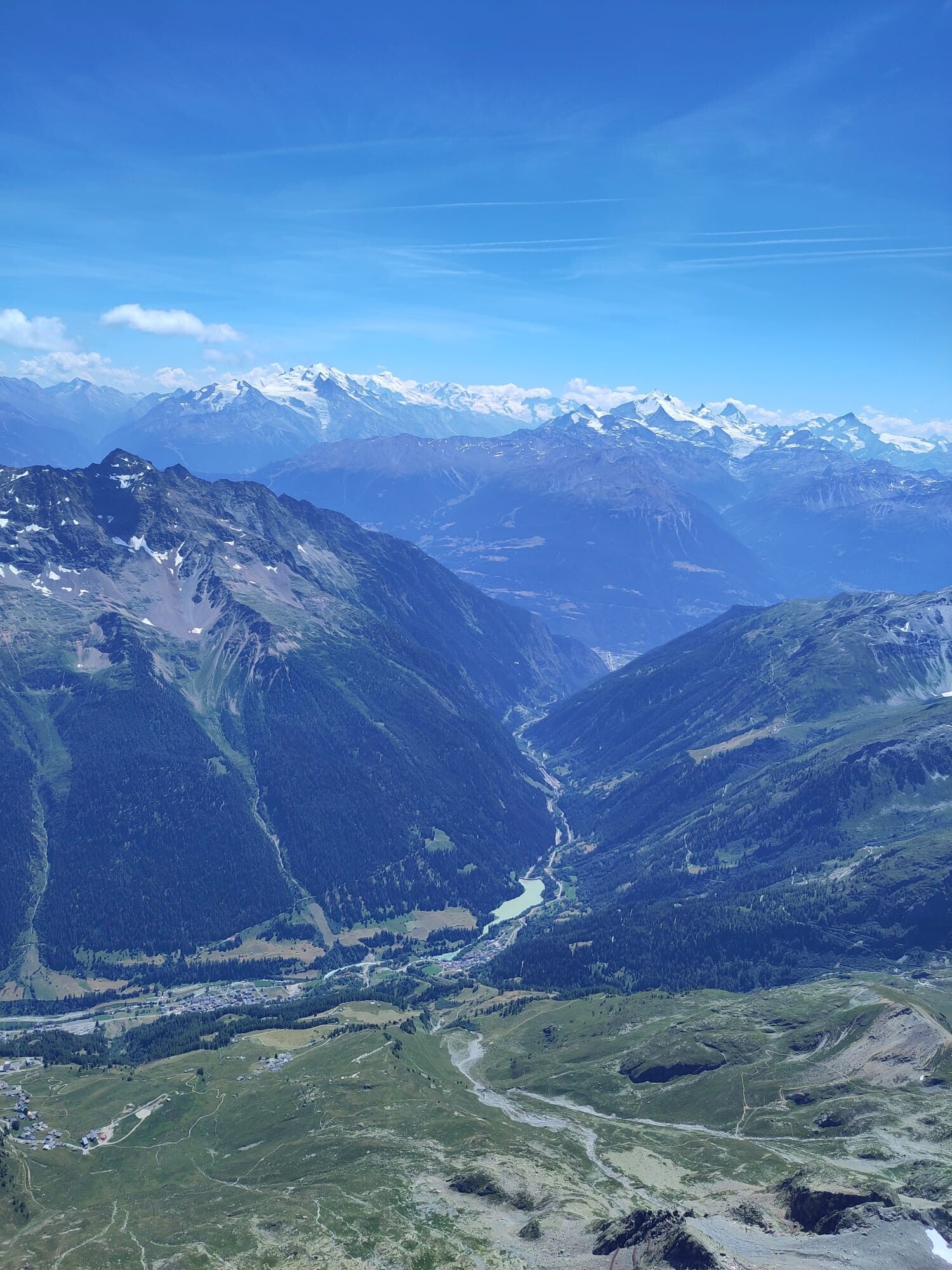
Strait line to the plaine morte
After this superb crossing, I immediately connected with the thermal that lifted me to almost 4,000 m. From there, I was able to link the Lötschental to the Plaine Morte Glacier above Crans-Montana almost in a straight line, needing only about ten turns in thermals over a distance of more than 20 km. The route followed the ridges above the Lötschental, then the Gemmi area, and finally the glacier overlooking Crans-Montana.
At that point, things did not work as expected. I had to detour around a ridge and descend below 2,600 m before finding the thermal above the ski slopes of the Valais resort. As is often the case in this area, cloudbase was lower than elsewhere. I climbed to 3,500 m and continued toward Anzère, then on to the Sanetsch Pass.
By then it was already 15:00. I decided to place my second turnpoint.
After the first turnpoint above the Rhone Glacier, I already had the classic 200 km FAI from Fiesch in mind. Using XCTrack, I therefore make sure that the third turnpoint of the FAI triangle will be reachable deep in the Saas Valley.
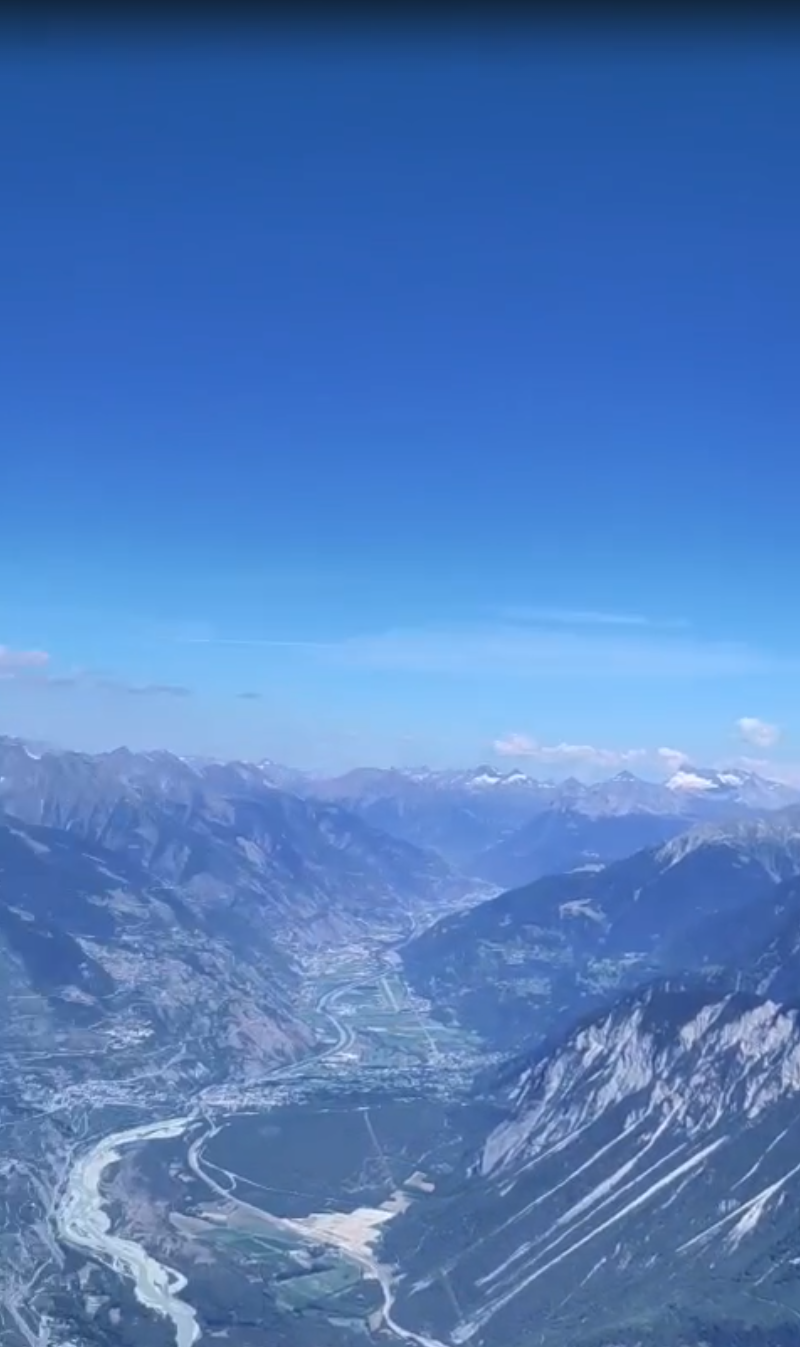
3800m above the Rhône
I reach 3,800 m above the Scex Rouge, an altitude more than sufficient to cross the Rhone Valley and connect with the Val d’Anniviers. Full speed on the accelerator, I know I will find a superb thermal on the Illhorn. As expected, as soon as I arrive above the forest at 2,400m, I climb more than 1,200 m in 8 minutes and find myself above 3,600 m at the gateway to the Val d’Anniviers. This allows me to surf along the ridge above Chandolin and reach the Weisshorn area.
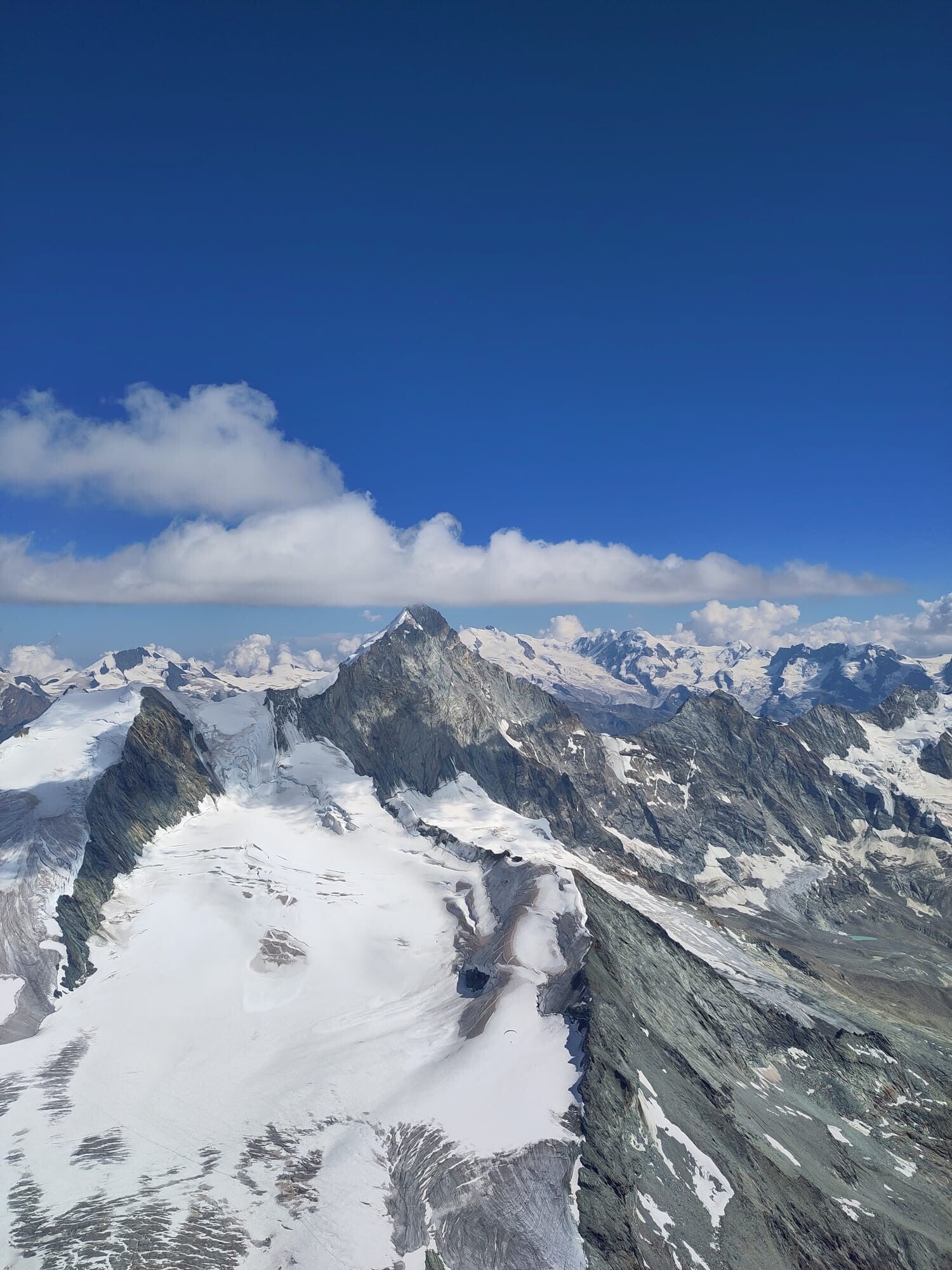
4500m around the Weisshorn
I manage to climb to nearly 4,500 m in superb thermals and find myself towering above the Weisshorn cirque. Unfortunately, the summit is partly covered by clouds, and I do not want to take any unnecessary risks. I am therefore about 50 metres short of actually flying over the summit of this legendary mountain.
I have to make a quick decision about the next part of the flight: continue towards the Matterhorn, like the pilots before me, or head east to reach my FAI turnpoint and finally complete the project I had set for myself?
I then remember that the forecast had called for a northerly wind in the Zermatt and Saas-Fee areas later in the afternoon, which would make the return to the Rhone Valley uncertain. I therefore decide to circumnavigate the Weisshorn from the north and head east, taking the direct route towards the third turnpoint of my FAI triangle.
I climb in the St. Niklaus thermal, which provides access to the 4,000 m massif separating the Matterthal from the Saasthal, and reach my highest altitude of the day at 4,551 m. I then continue towards the Weissmies ridge to connect with one final thermal and place my last turnpoint.
I then encounter a powerful and turbulent thermal, strongly displaced to the south by the northerly wind, which is already well established in this area. I climb from 3,600 m to 4,100 m in it, thereby placing my final turnpoint. I believe I am high enough to complete the triangle, but I still have to face the northerly wind to get out of the Saas-Fee valley.
Fortunately, I get good lift while staying along the Weissmies ridge. I am a little concerned about ending up on the lee side, but once I pass the Fletschhorn, I know that I am going to complete this flight without any further difficulties!
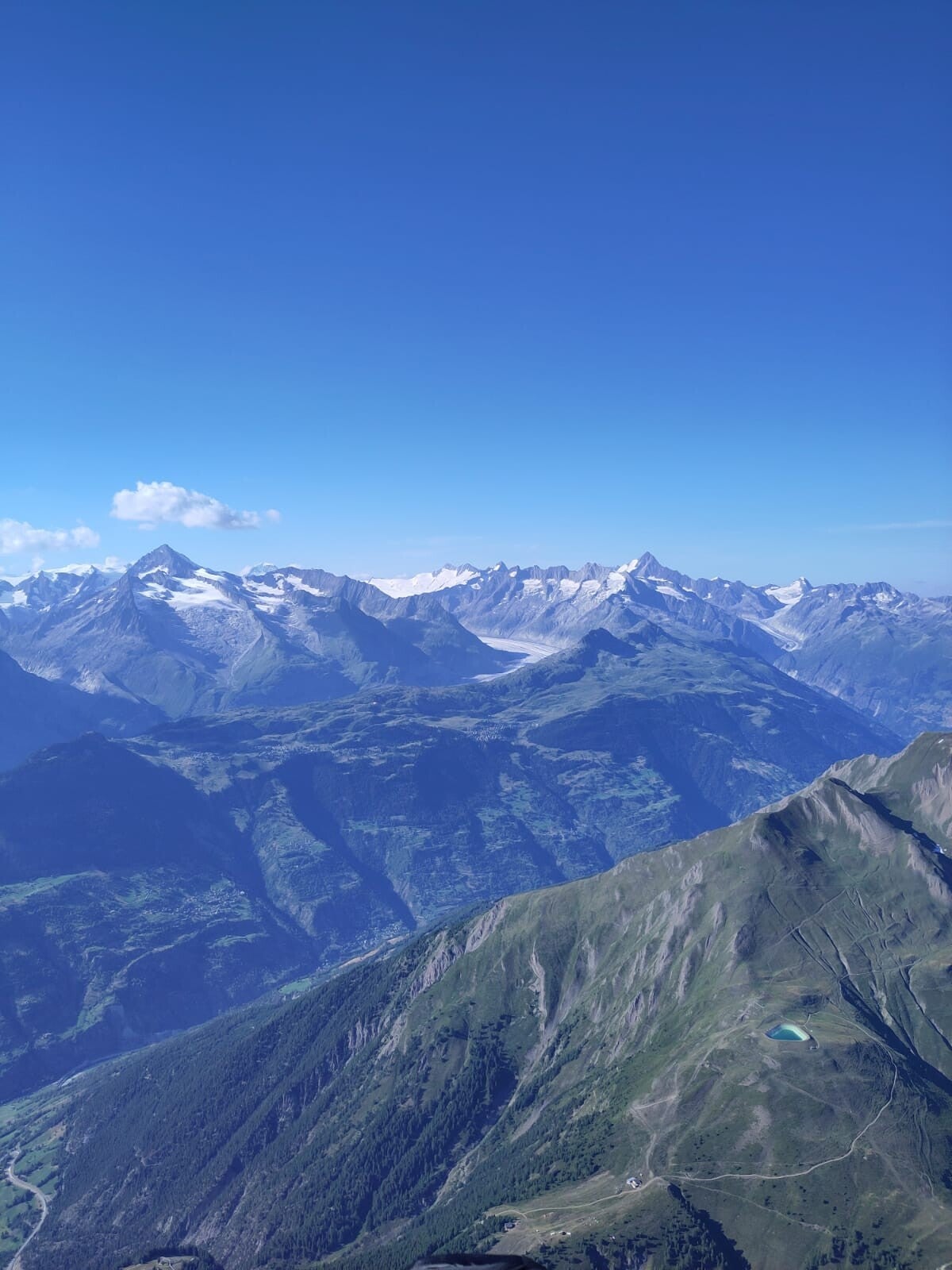
Final glide
I can then enjoy a 30-minute glide. I am high enough to complete my triangle perfectly and fly over the Fiesch launch site, from where I had taken off nearly eight hours earlier. The view is magnificent in the late afternoon light, and I am incredibly happy to complete this legendary 200 km FAI triangle in the high Swiss Alps.
But as every pilot knows, a flight is only finished once both feet are on the ground and the wing is safely packed away.
I fly over the launch site and naturally head towards the Fiesch landing field near the campsite. The descent is difficult. I keep getting lifted back up, and the air mass is still turbulent. The Fiesch landing area lies at the junction of three small valleys, and at this time of day the valley breezes from different directions are battling to see which one will prevail.
It therefore takes me almost 20 minutes to finally get down and land, allowing me to savour this magnificent flight.